
Astronomy news update from NASA : 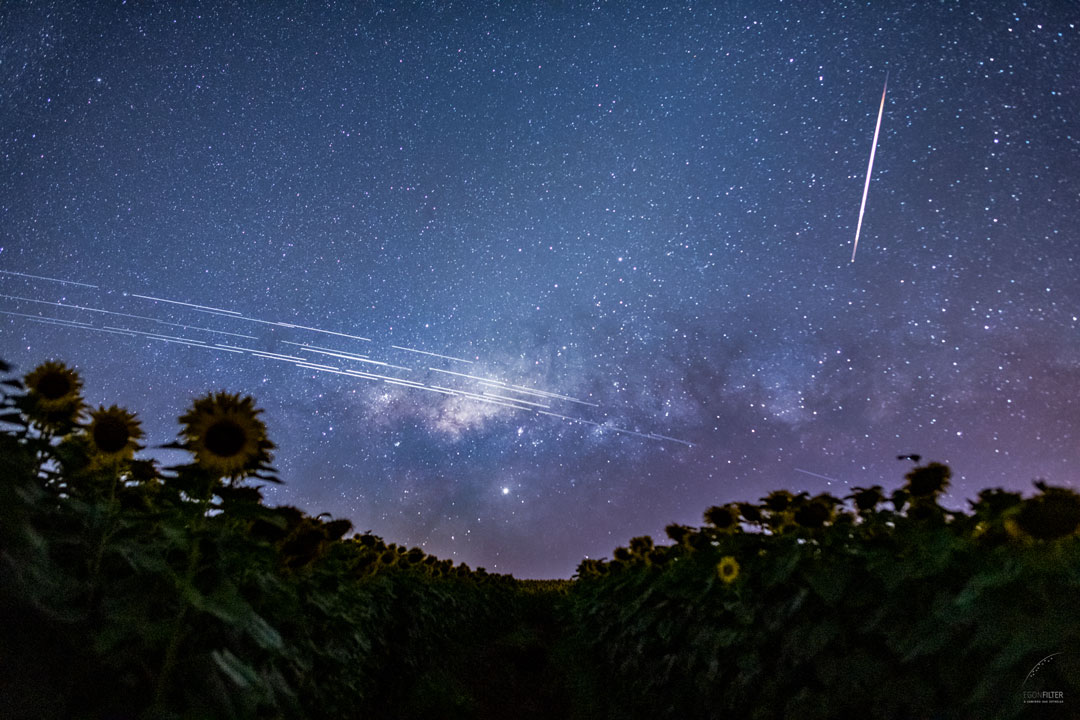
What are those streaks over the horizon? New Starlink satellites reflecting sunlight. SpaceX launched 60 Starlink communication satellites in May and 60 more in November. These satellites and thousands more are planned by communications companies in the next few years that may make streaks like these relatively common. Concern has been voiced by many in the astronomical community about how reflections from these satellites may affect future observations into space. In the pictured composite of 33 exposures, parallel streaks from Starlink satellites are visible over southern Brazil. Sunflowers dot the foreground, while a bright meteor was caught by chance on the upper right. Satellite reflections are not new -- the constellation of 66 first-generation Iridium satellites launched starting 20 years ago produced some flares so bright that they could be seen during the day. Most of these old Iridium satellites, however, have been de-orbited over the past few years.
from NASA https://ift.tt/2LFeT9I
via IFTTT
What are those streaks over the horizon? New Starlink satellites reflecting sunlight. SpaceX launched 60 Starlink communication satellites in May and 60 more in November. These satellites and thousands more are planned by communications companies in the next few years that may make streaks like these relatively common. Concern has been voiced by many in the astronomical community about how reflections from these satellites may affect future observations into space. In the pictured composite of 33 exposures, parallel streaks from Starlink satellites are visible over southern Brazil. Sunflowers dot the foreground, while a bright meteor was caught by chance on the upper right. Satellite reflections are not new -- the constellation of 66 first-generation Iridium satellites launched starting 20 years ago produced some flares so bright that they could be seen during the day. Most of these old Iridium satellites, however, have been de-orbited over the past few years.
from NASA https://ift.tt/2LFeT9I
via IFTTT
Our new 'Word Of The Day' article update : gylany , n :
(sociology) A social system based on equality of women and men. Today is Human Rights Day, which is recognized by the United Nations to emphasize the importance of human rights and to commemorate the adoption of the Universal Declaration of Human Rights, the first global enunciation of such rights, on this day in 1948.
(sociology) A social system based on equality of women and men. Today is Human Rights Day, which is recognized by the United Nations to emphasize the importance of human rights and to commemorate the adoption of the Universal Declaration of Human Rights, the first global enunciation of such rights, on this day in 1948.
Hello guys, We're here with some new information from NASA : 
To make room for the latest cargo craft on Nov. 29, Progress 73 departed the station after undocking from the Pirs docking compartment.
from NASA https://ift.tt/36cII9k
via IFTTT
To make room for the latest cargo craft on Nov. 29, Progress 73 departed the station after undocking from the Pirs docking compartment.
from NASA https://ift.tt/36cII9k
via IFTTT
Astronomy news update from NASA : 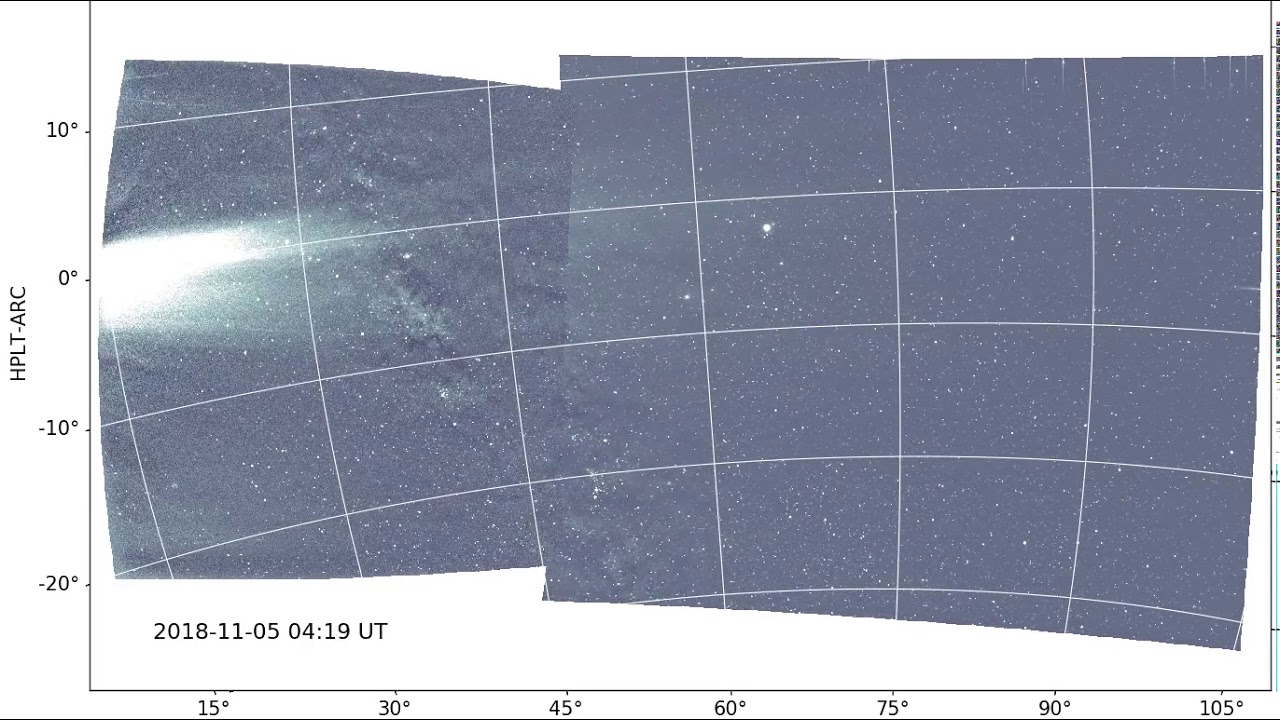
Everybody sees the Sun. Nobody's been there. Starting in 2018 though, NASA launched the robotic Parker Solar Probe (PSP) to investigate regions near to the Sun for the first time. The PSP's looping orbit brings it yet closer to the Sun each time around -- every few months. The featured time-lapse video shows the view looking sideways from behind PSP's Sun shield during its first approach to the Sun a year ago -- to about half the orbit of Mercury. The PSP's Wide Field Imager for Solar Probe (WISPR) cameras took the images over nine days, but they are digitally compressed here into about 14 seconds. The waving solar corona is visible on the far left, with stars, planets, and even the central band of our Milky Way Galaxy streaming by in the background as the PSP orbits the Sun. PSP has found the solar neighborhood to be surprisingly complex and to include switchbacks -- times when the Sun's magnetic field briefly reverses itself. The Sun is not only Earth's dominant energy source, its variable solar wind compresses Earth's atmosphere, triggers auroras, affects power grids, and can even damage orbiting communication satellites.
from NASA https://ift.tt/353z08Z
via IFTTT
Everybody sees the Sun. Nobody's been there. Starting in 2018 though, NASA launched the robotic Parker Solar Probe (PSP) to investigate regions near to the Sun for the first time. The PSP's looping orbit brings it yet closer to the Sun each time around -- every few months. The featured time-lapse video shows the view looking sideways from behind PSP's Sun shield during its first approach to the Sun a year ago -- to about half the orbit of Mercury. The PSP's Wide Field Imager for Solar Probe (WISPR) cameras took the images over nine days, but they are digitally compressed here into about 14 seconds. The waving solar corona is visible on the far left, with stars, planets, and even the central band of our Milky Way Galaxy streaming by in the background as the PSP orbits the Sun. PSP has found the solar neighborhood to be surprisingly complex and to include switchbacks -- times when the Sun's magnetic field briefly reverses itself. The Sun is not only Earth's dominant energy source, its variable solar wind compresses Earth's atmosphere, triggers auroras, affects power grids, and can even damage orbiting communication satellites.
from NASA https://ift.tt/353z08Z
via IFTTT
Our new 'Word Of The Day' article update : out of kilter , prepositional phrase :
(idiomatic) Askew, disturbed; not adjusted or working properly; out of order.
(idiomatic) Askew, disturbed; not adjusted or working properly; out of order.


