Astronomy news update from NASA :
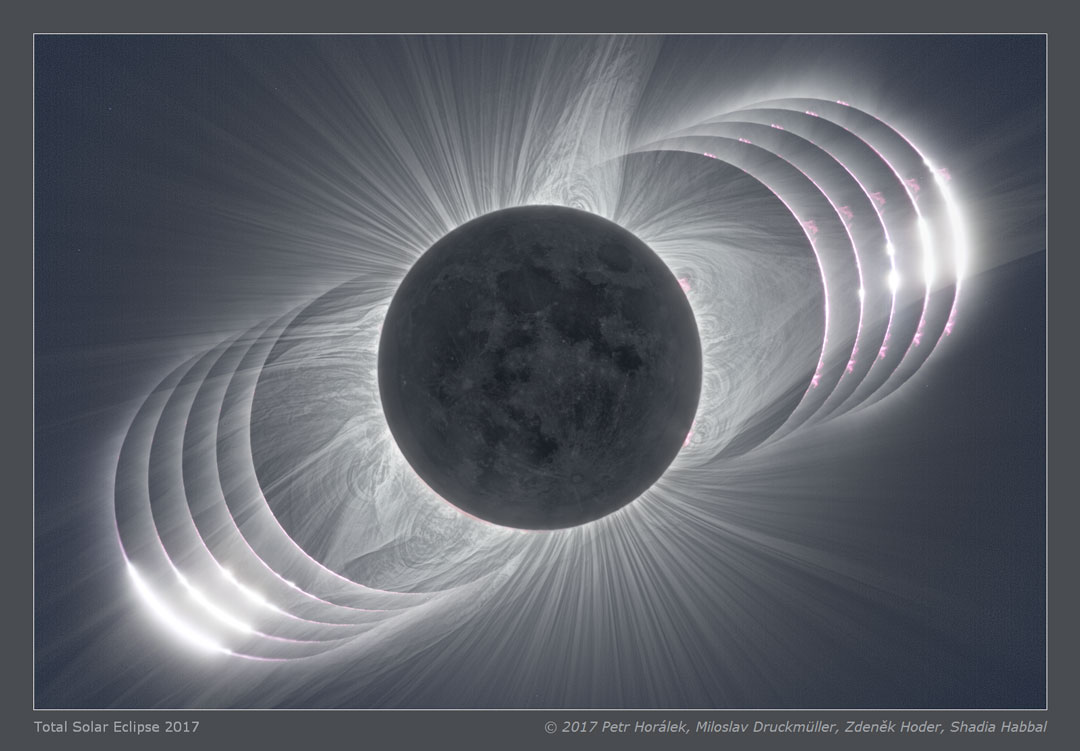
Most photographs don't adequately portray the magnificence of the Sun's corona. Seeing the corona first-hand during a total solar eclipse is unparalleled. The human eye can adapt to see coronal features and extent that average cameras usually cannot. Welcome, however, to the digital age. The featured central image digitally combined short and long exposures that were processed to highlight faint and extended features in the corona of the total solar eclipse that occurred in August of 2017. Clearly visible are intricate layers and glowing caustics of an ever changing mixture of hot gas and magnetic fields in the Sun's corona. Looping prominences appear bright pink just past the Sun's limb. Faint details on the night side of the New Moon can even be made out, illuminated by sunlight reflected from the dayside of the Full Earth. Images taken seconds before and after the total eclipse show glimpses of the background Sun known as Baily's Beads and Diamond Ring. Tomorrow, a new total solar eclipse will be visible from parts of South America.

from NASA https://ift.tt/2NoGUW8
via IFTTT
Astronomy news update from NASA :
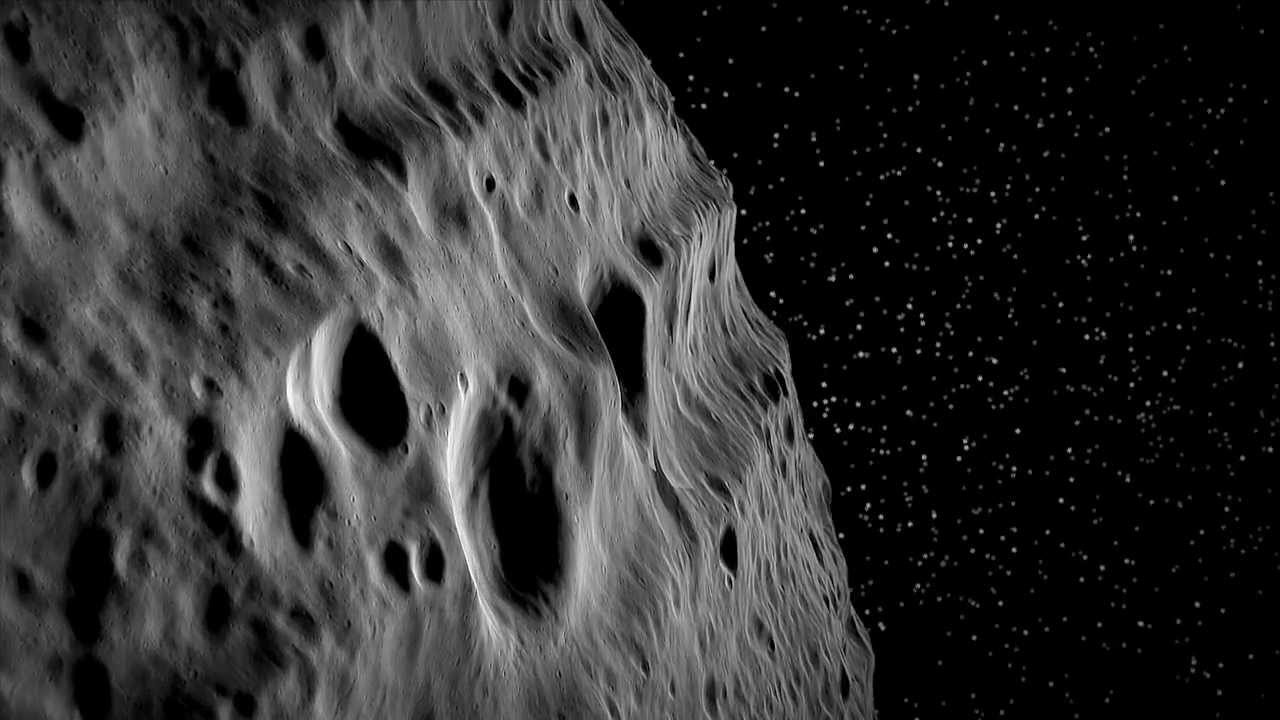
What would it be like to fly over the asteroid Vesta? Animators from the German Aerospace Center took actual images and height data from NASA's Dawn mission when it visited asteroid Vesta a few years ago and generated a virtual movie. The featured video begins with a sequence above Divalia Fossa, an unusual pair of troughs running parallel over heavily cratered terrain. Next, the virtual spaceship explores Vesta's 60-km Marcia Crater, showing numerous vivid details. Last, Dawn images were digitally recast with exaggerated height to better reveal Vesta's 5-km high mountain Aricia Tholus. The second largest object in the Solar System's asteroid belt, Vesta is the brightest asteroid visible from Earth and can be found with binoculars. Using Vesta Trek, you can explore all over Vesta yourself.

from NASA https://ift.tt/2IYbQIw
via IFTTT

California Was Warned 30 Years Ago About Climate Change. Now It's Feeling The Effects via Digg https://ift.tt/2FHYtdB

Here's The Kamala Harris/Joe Biden Moment That You'll Probably Be Hearing About Today via Digg https://ift.tt/2IUDKWc
Hello, Information from NASA NASA has awarded a contract to University of Hawaii Systems in Honolulu for management and operational support of the agency’s Infrared Telescope Facility (IRTF) and related services.

June 28, 2019
from NASA https://ift.tt/2NjQARZ
Hello, Information from NASA NASA has selected eight new research teams to collaborate on research into the intersection of space science and human space exploration as part of the Solar System Exploration Research Virtual Institute (SSERVI).

June 28, 2019
from NASA https://ift.tt/31ZpfHV

By CADE METZ from NYT Technology https://ift.tt/2NhoZRl
via IFTTT

By JAMIE CONDLIFFE from NYT Technology https://ift.tt/2J9lB5L
via IFTTT
Hello guys, We're here with some new information from NASA :
The last of four structural test articles for NASA’s Space Launch System (SLS) was loaded onto NASA’s barge Pegasus Wednesday, June 26, 2019, at NASA’s Michoud Assembly Facility in New Orleans.

from NASA https://ift.tt/2X3viYk
via IFTTT

By RAYMOND ZHONG from NYT Technology https://ift.tt/2Yld3PE
via IFTTT

By NEIL VIGDOR and LAURA M. HOLSON from NYT Technology https://ift.tt/2Jei464
via IFTTT
Our new 'Word Of The Day' article update : onager , n :
The Asiatic wild ass or hemione (Equus hemionus), an animal of the horse family native to Asia; specifically, the Persian onager, Persian wild ass, or Persian zebra (Equus hemionus onager). (military, historical) A military engine acting like a sling which threw stones from a bag or wooden bucket powered by the torsion from a bundle of ropes or sinews operated by machinery; a torsion catapult.

By CADE METZ from NYT Technology https://ift.tt/2ZTQxxI
via IFTTT
Hello, Information from NASA NASA has partnered with the Exploratorium in San Francisco to bring live views to people across the world of a total solar eclipse, occurring Tuesday, July 2, over South America.

June 27, 2019
from NASA https://ift.tt/2NgMeLm
Hello, Information from NASA NASA has announced that our next destination in the solar system is the unique, richly organic world Titan. Advancing our search for the building blocks of life, the Dragonfly mission will fly multiple sorties to sample and examine sites around Saturn’s icy moon.

June 27, 2019
from NASA https://ift.tt/2xhznxE

By DON CLARK from NYT Technology https://ift.tt/2J9U1VT
via IFTTT

By KATE CONGER from NYT Technology https://ift.tt/2RKQIsk
via IFTTT
Hello, Information from NASA NASA will host a media teleconference at 1 p.m. EDT Tuesday, July 9, to discuss select science investigations launching on the next SpaceX commercial resupply flight to the International Space Station.

June 27, 2019
from NASA https://ift.tt/2FCJl11
Hello guys, We're here with some new information from NASA :
This stunning image of Jupiter's stormy northern hemisphere was captured by NASA's Juno spacecraft as it performed a close pass of the gas giant planet.

from NASA https://ift.tt/2LlCUTT
via IFTTT

By KEVIN ROOSE from NYT Technology https://ift.tt/2Xhj0kh
via IFTTT
Our new 'Word Of The Day' article update : lour , v :
(intransitive) To frown; to look sullen. (intransitive, figuratively) To be dark, gloomy, and threatening, as clouds; of the sky: to be covered with dark and threatening clouds; to show threatening signs of approach, as a tempest.

The World's Smallest Big Rocket Company via Digg https://ift.tt/31PNuIF

By DAISUKE WAKABAYASHI from NYT Technology https://ift.tt/2IP6xLu
via IFTTT
Hello, Information from NASA NASA will announce a major new science mission to explore our solar system during a broadcast of NASA Science Live at 4 p.m. EDT Thursday, June 27. The announcement will air on NASA Television, the agency's website, Facebook Live, YouTube, Periscope and USTREAM.

June 26, 2019
from NASA https://ift.tt/2NhtvPL

By CHRISTINE HAUSER from NYT Technology https://ift.tt/2ZMRdon
via IFTTT

By JEREMY EGNER from NYT Technology https://ift.tt/2J6xdGG
via IFTTT
Hello guys, We're here with some new information from NASA :
Snowflakes that cover mountains or linger under tree canopies are a vital freshwater resource for over a billion people around the world.

from NASA https://ift.tt/2YaNZL0
via IFTTT

By ERIN GRIFFITH from NYT Technology https://ift.tt/31WyKYz
via IFTTT

By BRIAN X. CHEN from NYT Technology https://ift.tt/2xc5TkR
via IFTTT

By NATHANIEL POPPER from NYT Technology https://ift.tt/2FAX7Bw
via IFTTT
Our new 'Word Of The Day' article update : indri , n :
One of the largest living lemurs, Indri indri, which is native to Madagascar. Today is the Independence Day of Madagascar.

I Went To Australia To Test Out Tesla’s Vision Of The Future via Digg http://bit.ly/2Ncn2pq
Hello, Information from NASA NASA Television will broadcast launch and prelaunch activities for the Ascent Abort-2 flight test of the launch abort system for NASA’s Orion spacecraft’s, which will help pave the way for Artemis missions with astronauts to the Moon and then Mars.

June 25, 2019
from NASA https://ift.tt/2FuyIO0
Hello, Information from NASA NASA has selected Bechtel National, Inc., of Reston, Virginia, to design and build a second mobile launch platform, known as Mobile Launcher 2 or ML2, for Exploration Ground Systems at the agency’s Kennedy Space Center in Florida.

June 25, 2019
from NASA https://go.nasa.gov/2ILRdzy

By PAUL MOZUR and CECILIA KANG from NYT Technology https://nyti.ms/2Y7UMVP
via IFTTT
Hello guys, We're here with some new information from NASA :
The Soyuz MS-11 spacecraft is seen as it lands in a remote area near the town of Zhezkazgan, Kazakhstan with Expedition 59 crew members.

from NASA https://go.nasa.gov/2X2EITM
via IFTTT
Hello, Information from NASA NASA technology demonstrations, which one day could help the agency get astronauts to Mars, and science missions, which will look at the space environment around Earth and how it affects us, have launched into space on a Falcon Heavy rocket.

June 25, 2019
from NASA https://go.nasa.gov/2X1gR77
Hello, Information from NASA NASA astronaut Anne McClain and two of her Expedition 59 crewmates returned to Earth from the International Space Station Monday, landing safely in Kazakhstan at 10:47 p.m. EDT (8:47 a.m. Tuesday, June 25, local time) after months of science and four spacewalks aboard the microgravity laboratory.

June 25, 2019
from NASA https://go.nasa.gov/2X575pp
Our new 'Word Of The Day' article update : a mite , adv :
(informal) To a small extent; in a small amount; rather.

By JENNIFER VALENTINO-DeVRIES from NYT Technology https://nyti.ms/2Ya6war
via IFTTT
Hello guys, We're here with some new information from NASA :
NASA astronaut and Astronaut Office Representative Joe Acaba is seen along with other NASA, Canadian Space Agency and Roscosmos teams as they deploy from Karaganda for the Expedition 59 landing.

from NASA https://go.nasa.gov/2ZHnOMh
via IFTTT

By CECILIA KANG from NYT Technology https://nyti.ms/2KCd3av
via IFTTT
Our new 'Word Of The Day' article update : adynaton , n :
(rhetoric) A form of hyperbole that uses exaggeration so magnified as to express impossibility; an instance of such hyperbole.

By KEVIN ROOSE from NYT Technology https://nyti.ms/2Y7nNRn
via IFTTT

By DAVID STREITFELD from NYT Technology https://nyti.ms/2L4AgSm
via IFTTT

By STEVE LOHR from NYT Technology https://nyti.ms/2L4yMaK
via IFTTT
Hello guys, We're here with some new information from NASA :
Satellites love hydrazine – a type of space propellant – but it’s toxic to people and extremely difficult to handle. A non-toxic alternative will be put to the test with NASA’s Green Propellant Infusion Mission (GPIM), set to launch on a SpaceX Falcon Heavy rocket.

from NASA https://go.nasa.gov/2N69GuQ
via IFTTT
Astronomy news update from NASA :
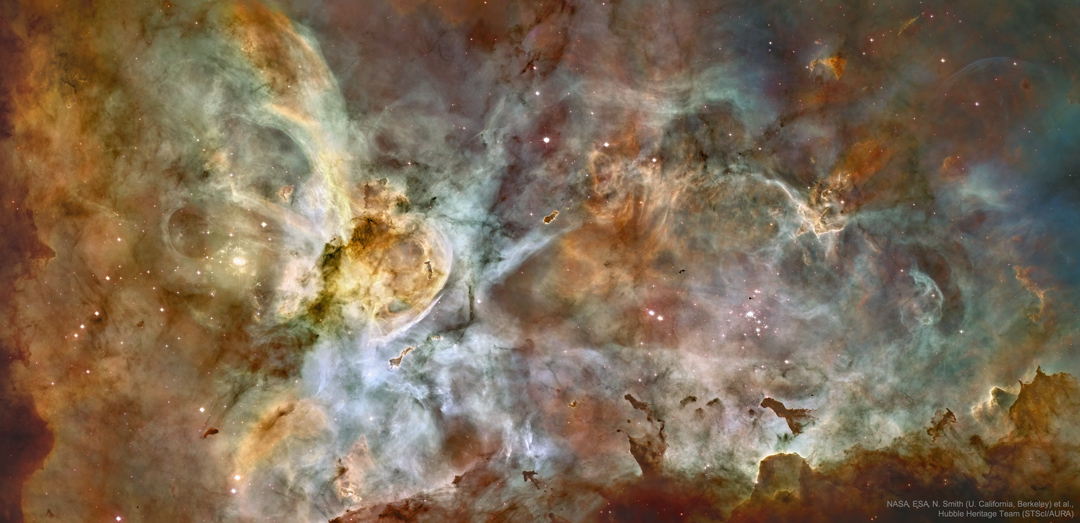
How do violent stars affect their surroundings? To help find out, astronomers created a 48-frame high-resolution, controlled-color panorama of the center of the Carina Nebula, one of the largest star forming regions on the night sky. The featured image, taken in 2007, was the most detailed image of the Carina Nebula yet taken. Cataloged as NGC 3372, the Carina Nebula is home to streams of hot gas, pools of cool gas, knots of dark globules, and pillars of dense dusty interstellar matter. The Keyhole Nebula, visible left of center, houses several of the most massive stars known. These large and violent stars likely formed in dark globules and continually reshape the nebula with their energetic light, outflowing stellar winds, and ultimately by ending their lives in supernova explosions. Visible to the unaided eye, the entire Carina Nebula spans over 450 light years and lies about 8,500 light-years away toward the constellation of Ship's Keel (Carina).

from NASA https://go.nasa.gov/2N5te2s
via IFTTT
Our new 'Word Of The Day' article update : ithyphallic , adj :
(historical, Ancient Rome) Of or pertaining to the erect phallus that was carried in bacchic processions. (specifically) Of a poem or song: having the metre of an ode sung in honour of the bacchic phallus. Of or pertaining to an upward pointing, erect penis; (specifically) of an artistic depiction of a deity or other figure: possessing an erect penis. (by extension) Lascivious, obscene.
Astronomy news update from NASA :
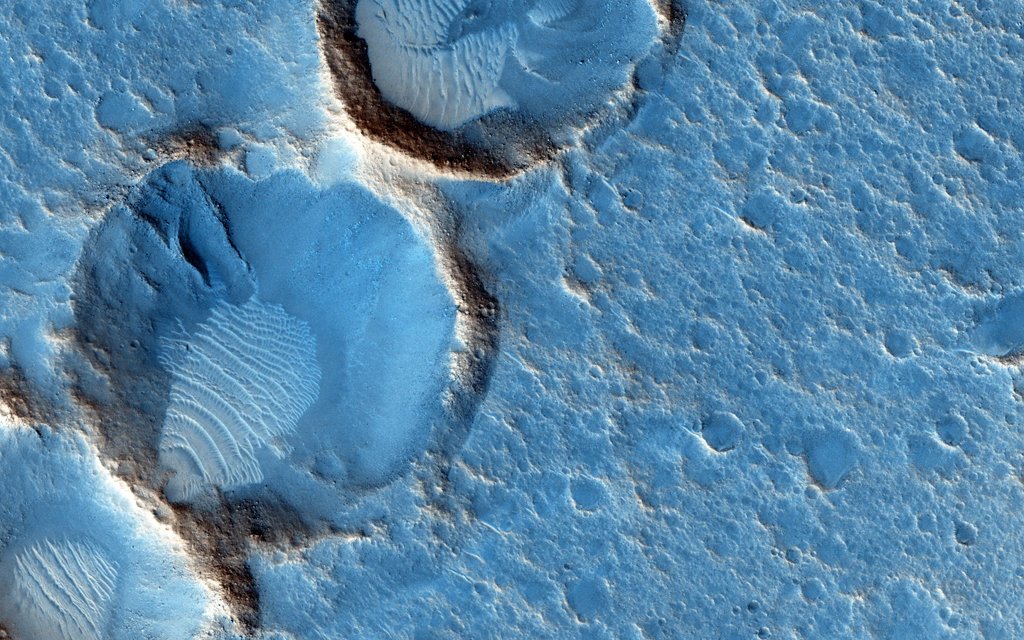
This close-up from the Mars Reconnaissance Orbiter's HiRISE camera shows weathered craters and windblown deposits in southern Acidalia Planitia. A striking shade of blue in standard HiRISE image colors, to the human eye the area would probably look grey or a little reddish. But human eyes have not gazed across this terrain, unless you count the eyes of NASA astronauts in the scifi novel The Martian by Andy Weir. The novel chronicles the adventures of Mark Watney, an astronaut stranded at the fictional Mars mission Ares 3 landing site corresponding to the coordinates of this cropped HiRISE frame. For scale Watney's 6-meter-diameter habitat at the site would be about 1/10th the diameter of the large crater. Of course, the Ares 3 landing coordinates are only about 800 kilometers north of the (real life) Carl Sagan Memorial Station, the 1997 Pathfinder landing site.

from NASA https://go.nasa.gov/2ZEWoH2
via IFTTT

Ranking Sugars By How (Un)healthy They Are via Digg http://bit.ly/2N1lQ8b
Our new 'Word Of The Day' article update : smorgasbord , n :
A Swedish-style buffet comprising a variety of cold sandwiches and other dishes; (by extension) any buffet with a wide selection of dishes. (figuratively) An abundant and diverse collection of things. Today in 2019 is Midsommardagen or Midsummer’s Day in Sweden.
Hello, Information from NASA Media are invited to NASA’s Michoud Assembly Facility in New Orleans at 9:30 a.m. CDT Friday, June 28, to view progress on the rocket core stage for the Space Launch System’s Artemis 1 Moon mission.

June 21, 2019
from NASA https://go.nasa.gov/2xbzR8g
Hello, Information from NASA Media are invited to a ribbon-cutting ceremony at 10 a.m. EDT Tuesday, July 2, celebrating the renaming of NASA’s Katherine Johnson Independent Verification and Validation (IV&V) Facility in Fairmont, West Virginia, after the West Virginia native and storied NASA icon.

June 21, 2019
from NASA https://go.nasa.gov/2KxVKaz

By CADE METZ from NYT Technology https://nyti.ms/2ZGsOky
via IFTTT
Hello guys, We're here with some new information from NASA :
The electric motors for X-57’s Mod II vehicle and their propellers were powered up and spun together for the first time as part of an integrated spin test.

from NASA https://go.nasa.gov/2Lcdesy
via IFTTT

By JAMIE CONDLIFFE from NYT Technology https://nyti.ms/2L5V5wx
via IFTTT
Astronomy news update from NASA :
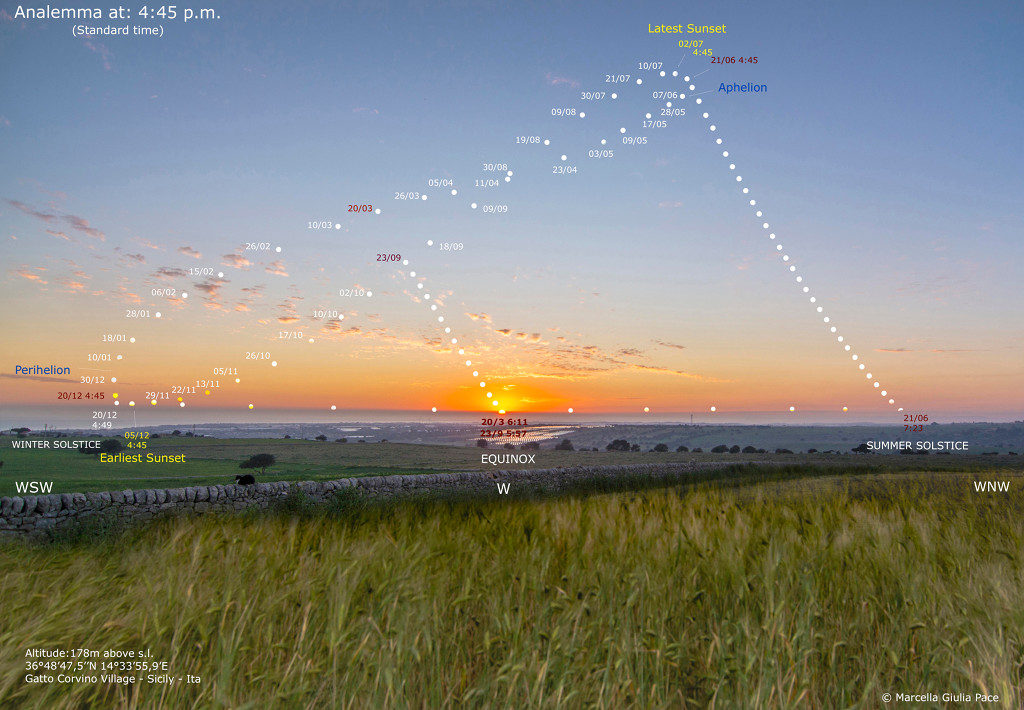
Today, the solstice is at 15:54 Universal Time, the Sun reaching the northernmost declination in its yearly journey through planet Earth's sky. A June solstice marks the astronomical beginning of summer in the northern hemisphere and winter in the south. It also brings the north's longest day, the longest period between sunrise and sunset. In fact the June solstice sun is near the top, at the most northern point in the analemma or figure 8 curve traced by the position of the Sun in this composite photo. The analemma was created (video) from images taken every 10 days at the same time from June 21, 2018 and June 7, 2019. The time was chosen to be the year's earliest sunset near the December solstice, so the analemma's lowest point just kisses the unobstructed sea horizon at the left. Sunsets arranged along the horizon toward the right (north) are centered on the sunset at the September equinox and end with sunset at the June solstice.

from NASA https://go.nasa.gov/2NaEZV0
via IFTTT
Our new 'Word Of The Day' article update : ski-through , adj :
(skiing) Of a ski lodge or other hotel establishment: providing skiers with the service of transporting their equipment, luggage, and vehicles to other establishments so they can ski directly to those establishments. (skiing) Of a restaurant, shop, or other establishment or facility: providing service to skiers while they are still wearing their skis. In the Southern Hemisphere according to Coordinated Universal Time (UTC), the winter solstice falls on this day in 2019.

This Father Of Three Put Everything Into Bitcoin. Here’s What Happened Next. via Digg http://bit.ly/2Rr6qIS
Hello, Information from NASA Fifty years ago, an unparalleled team of experts in a mission control center at NASA’s Johnson Space Center in Houston landed the first humans on the Moon. Media are invited to join NASA Administrator Jim Bridenstine for the reopening of this historic and newly-restored facility at 9 a.m. CDT Friday, June 28.

June 20, 2019
from NASA https://go.nasa.gov/2WWvXQ1
Hello, Information from NASA NASA has selected two new missions to advance our understanding of the Sun and its dynamic effects on space.

June 20, 2019
from NASA https://go.nasa.gov/2Kqqomx

By ERIN GRIFFITH from NYT Technology https://nyti.ms/2IuV4Ro
via IFTTT
Hello, Information from NASA NASA astronaut Anne McClain and two crewmates on the International Space Station are scheduled to conclude their stay aboard the orbiting laboratory Monday, June 24.

June 20, 2019
from NASA https://go.nasa.gov/2x7lVw6
Hello guys, We're here with some new information from NASA :
At 5:30 a.m. EDT Thursday, June 20, 2019, a 40-foot tall rocket carrying 28 student experiments (measuring acceleration, humidity, pressure, temperature and radiation counts) launched from Wallops Flight Facility in Virginia.

from NASA https://go.nasa.gov/2x555ht
via IFTTT

By ERIN GRIFFITH from NYT Technology https://nyti.ms/2Fmssrr
via IFTTT
Hello, Information from NASA NASA Television coverage is scheduled for an upcoming prelaunch activity and first nighttime launch of a SpaceX Falcon Heavy rocket, which will be carrying four agency technology missions to help improve future spacecraft design and performance.

June 20, 2019
from NASA https://go.nasa.gov/2MY9UUE

By DAVID STREITFELD from NYT Technology https://nyti.ms/2LbbEaL
via IFTTT
Astronomy news update from NASA :
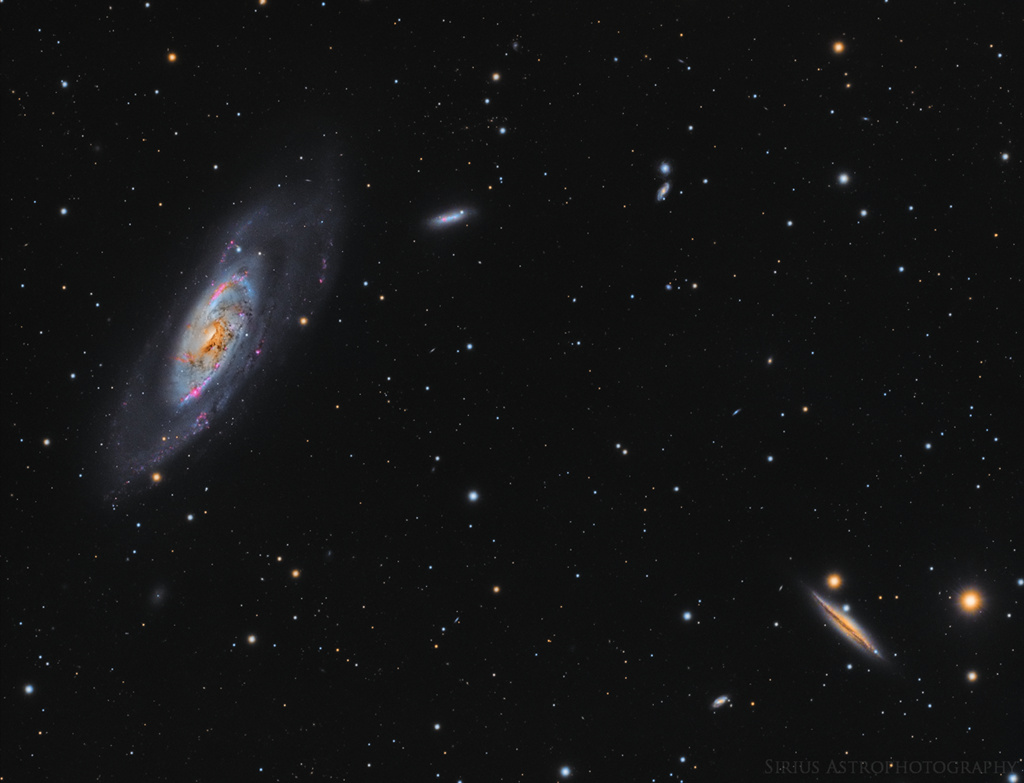
Big, bright, beautiful spiral, Messier 106 dominates this cosmic vista. The nearly two degree wide telescopic field of view looks toward the well-trained constellation Canes Venatici, near the handle of the Big Dipper. Also known as NGC 4258, M106 is about 80,000 light-years across and 23.5 million light-years away, the largest member of the Canes II galaxy group. For a far away galaxy, the distance to M106 is well-known in part because it can be directly measured by tracking this galaxy's remarkable maser, or microwave laser emission. Very rare but naturally occurring, the maser emission is produced by water molecules in molecular clouds orbiting its active galactic nucleus. Another prominent spiral galaxy on the scene, viewed nearly edge-on, is NGC 4217 below and right of M106. The distance to NGC 4217 is much less well-known, estimated to be about 60 million light-years.

from NASA https://go.nasa.gov/2Y3W18C
via IFTTT
Our new 'Word Of The Day' article update : steatopygous , adj :
(physiology) Pertaining to steatopygia; having fat or prominent buttocks.

How Graffiti Became Gentrified via Digg http://bit.ly/2Fnzg8i
Hello, Information from NASA NASA has awarded the Environmental Test and Integration Services III contract to Northrop Grumman Innovation Systems’ Technical Services Division (TSD) in Greenbelt, Maryland.

June 19, 2019
from NASA https://go.nasa.gov/31MyCuH

By CECILIA KANG and DAISUKE WAKABAYASHI from NYT Technology https://nyti.ms/2WPaUim
via IFTTT
Hello guys, We're here with some new information from NASA :
The pilot of NASA’s X-59 Quiet SuperSonic Technology, or QueSST, aircraft will navigate the skies in a cockpit unlike any other.

from NASA https://go.nasa.gov/2XpdOK8
via IFTTT
Hello, Information from NASA Media are invited to NASA’s Kennedy Space Center in Florida from 6 to 10 a.m. EDT Thursday, June 27, to view the agency’s mobile launcher as it makes its final roll on crawler-transporter 2 to Launch Pad 39B prior to the launch of the first Artemis mission.

June 19, 2019
from NASA https://go.nasa.gov/31DUzf7

By ANNA DUBENKO from NYT Technology https://nyti.ms/2x60lrP
via IFTTT
Astronomy news update from NASA :
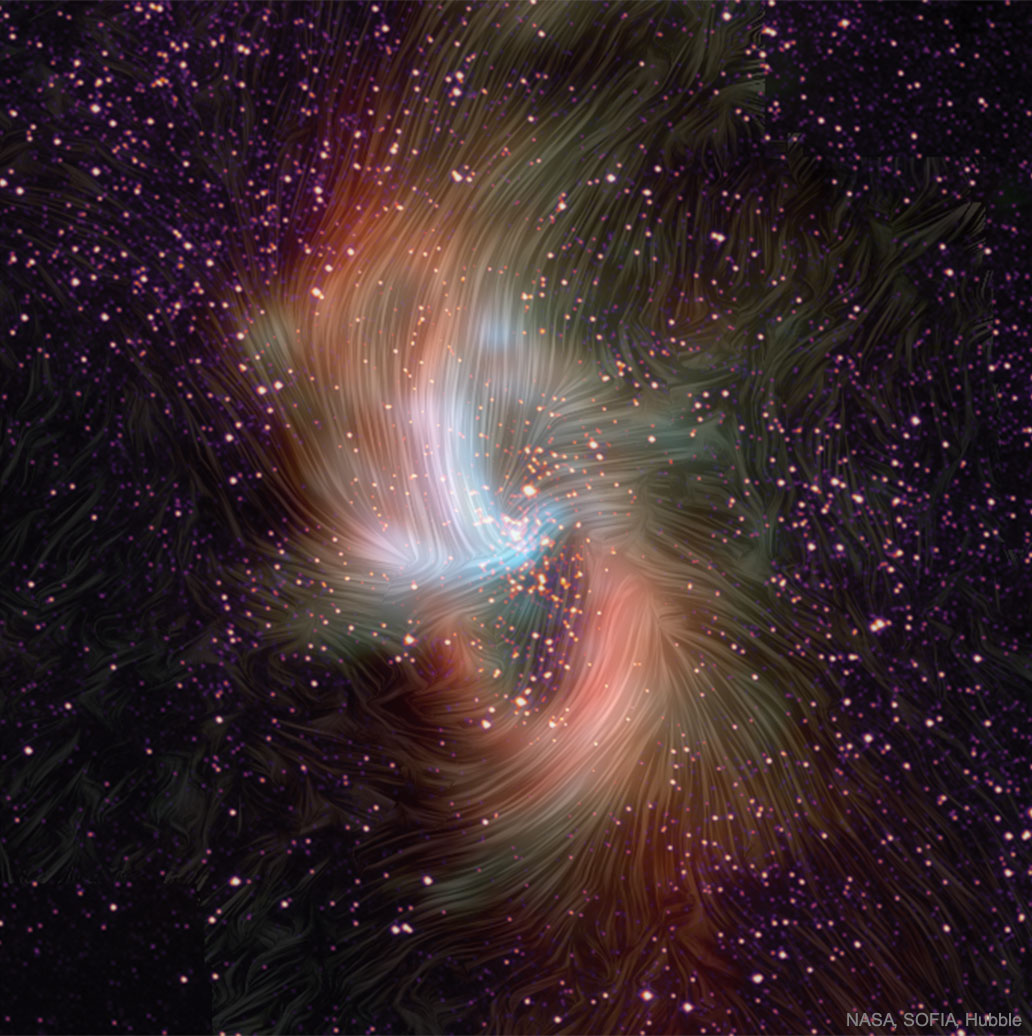
What's the magnetic field like in the center of our Milky Way Galaxy? To help find out, NASA's SOFIA -- an observatory flying in a modified 747 -- imaged the central region with an instrument known as HAWC+. HAWC+ maps magnetism by observing polarized infrared light emitted by elongated dust grains rotating in alignment with the local magnetic field. Now at our Milky Way's center is a supermassive black hole with a hobby of absorbing gas from stars it has recently destroyed. Our galaxy's black hole, though, is relatively quiet compared to the absorption rate of the central black holes in active galaxies. The featured image gives a clue as to why -- a surrounding magnetic field may either channel gas into the black hole -- which lights up its exterior, or forces gas into an accretion-disk holding pattern, causing it to be less active -- at least temporarily. Inspection of the featured image -- appearing perhaps like a surreal mashup of impasto art and gravitational astrophysics -- brings out this telling clue by detailing the magnetic field in and around a dusty ring surrounding Sagittarius A*, the black hole in our Milky Way's center.

from NASA https://go.nasa.gov/2Iq6CFx
via IFTTT