Showing posts with label NASA. Show all posts
Hello guys, We're here with some new information from NASA :
The newly revealed infant stars appear as pink and red specks toward the center and appear to have formed in regularly spaced intervals along linear structures.

from NASA https://ift.tt/35QZqLP
via IFTTT
Astronomy news update from NASA :
Where is the best place to collect a surface sample from asteroid Bennu? Launched in 2016, NASA sent the robotic Origins, Spectral Interpretation, Resource Identification, Security, Regolith Explorer (OSIRIS-REx) to investigate the 500-meter-across asteroid 101955 Bennu. After mapping the near-Earth asteroid's dark surface, OSIRIS-REx will next touch Bennu's surface in 2020 August to collect a surface sample. The featured 23-second time-lapse video shows four candidate locations for the touch, from which NASA chose just one earlier this month. NASA chose the Nightingale near Bennu's northern hemisphere as the primary touch-down spot because of its relative flatness, lack of boulders, and apparent abundance of fine-grained sand. Location Osprey is the backup. NASA plans to return soil samples for Bennu to Earth in 2023 for a detailed analysis.

from NASA https://ift.tt/396Mpji
via IFTTT
Hello, Information from NASA Boeing’s CST-100 Starliner spacecraft completed the first land touchdown of a human-rated capsule in U.S. history Sunday at White Sands Space Harbor in New Mexico, wrapping up the company’s uncrewed Orbital Flight Test as part of NASA’s Commercial Crew Program.

December 22, 2019
from NASA https://ift.tt/2PMq96p
Hello, Information from NASA NASA and Boeing will provide live coverage of the landing on Sunday, Dec. 22, of the company’s CST-100 Starliner spacecraft, on return from its Orbital Flight Test for NASA’s Commercial Crew Program.

December 22, 2019
from NASA https://ift.tt/2Zf7ROv
Astronomy news update from NASA :
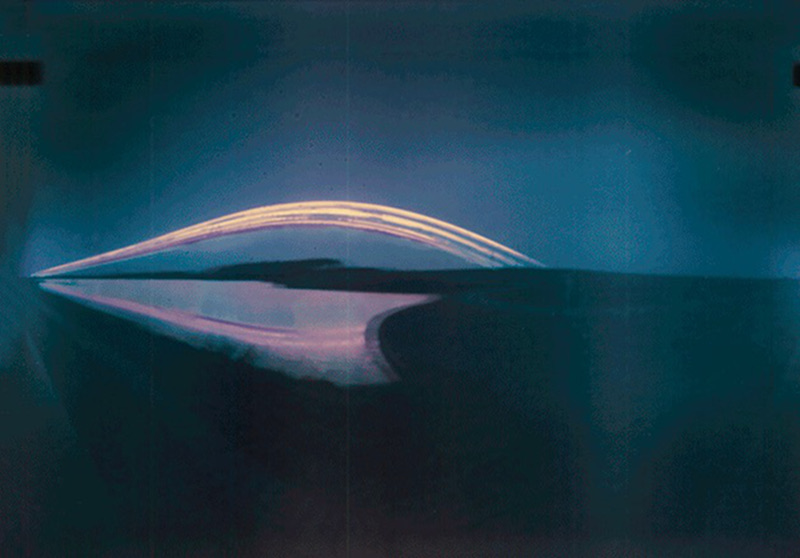
The 2019 December Solstice, on the first day of winter in planet Earth's northern hemisphere and summer in the south, is at 4:19 Universal Time December 22. That's December 21 for North America, though. Celebrate with a timelapse animation of the Sun's seasonal progression through the sky. It was made with solargraph images from an ingenious array of 27 pinhole cameras. The first frame from the Solarcan camera matrix was recorded near December 21, 2018. The last frame in the series finished near June 21, 2019, the northern summer solstice. All 27 camera exposures were started at the same time, with a camera covered and removed from the array once a week. Viewed consecutively the pinhole camera pictures accumulate the traces of the Sun's daily path from winter (bottom) to summer (top) solstice. Traces of the Sun's path are reflected by the foreground Williestruther Loch, in the Scottish Borders. Just select the image or follow this link to play the entire 27 frame (gif) timelapse.

from NASA https://ift.tt/35QjePy
via IFTTT
Hello, Information from NASA NASA and Boeing will host a media teleconference at 2 p.m. EST Saturday, Dec. 21, to discuss the status of the Boeing Orbital Flight Test, and the test objectives that have been, and are expected to be, accomplished related to NASA’s Commercial Crew Program.

December 21, 2019
from NASA https://ift.tt/2ZfwKK2
Hello, Information from NASA Statement from NASA Administrator Jim Bridenstine regarding the Boeing Orbital Flight test.

December 20, 2019
from NASA https://ift.tt/2Med1F4
Hello guys, We're here with some new information from NASA :
​This image from the NASA/ESA Hubble Space Telescope shows IC 2051, a galaxy in the southern constellation of Mensa (the Table Mountain) lying about 85 million light-years away. It is a spiral galaxy, as evidenced by its characteristic whirling, pinwheeling arms, and it has a bar of stars slicing through its center.

from NASA https://ift.tt/2PI3F6T
via IFTTT
Astronomy news update from NASA :
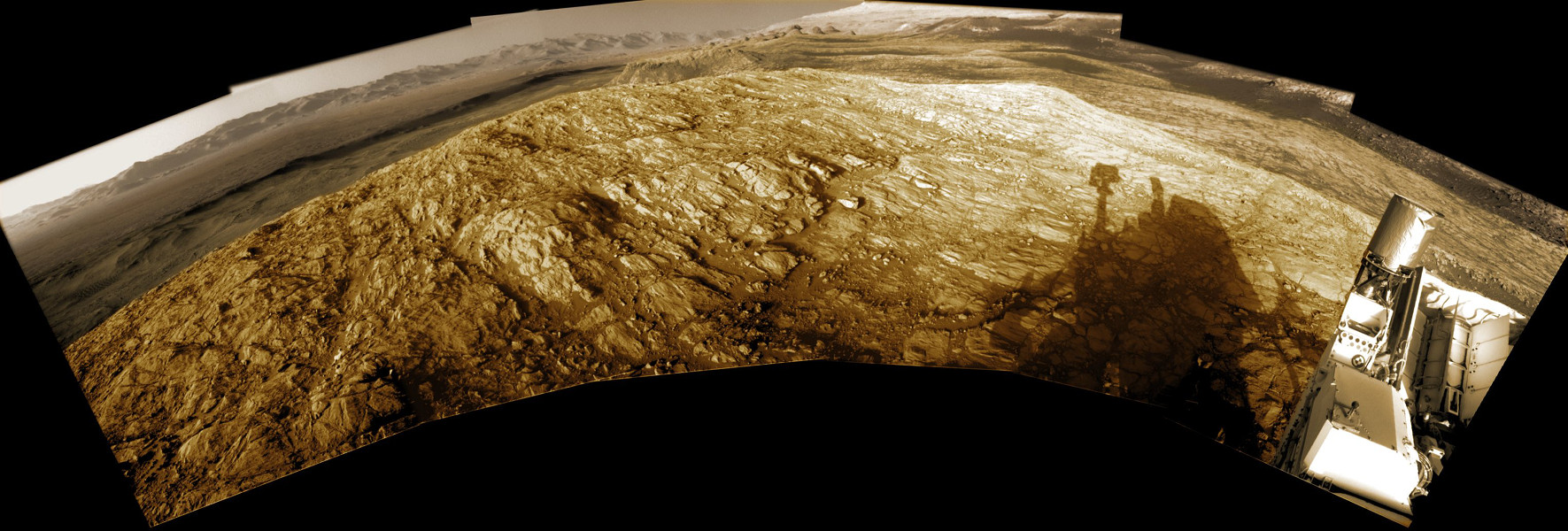
Shadows grow long near sunset in this wide panoramic view from the Curiosity rover on Mars. Made with Curiosity's navcam, the scene covers about 200 degrees from north through east to south (left to right), stitched together from frames taken by the Mars rover on sol 2616. That's just Earth date December 16. Curiosity is perched on top of a plateau on Western Butte. The distant northern rim of Gale crater is visible along the left. Near center is Central Butte, already visited by Curiosity. On the right, the shadow of the rover seems to stretch toward the base of Aeolis Mons (Mount Sharp), a future destination. The monochrome navcam frames have been colorized to approximate the colors of the late martian afternoon.

from NASA https://ift.tt/2Z8WrvE
via IFTTT
Hello, Information from NASA NASA is inviting members of the media to a behind-the-scenes tour and briefing on five new research campaigns that will take to the field in 2020 to explore questions critical to understanding our home planet.

December 19, 2019
from NASA https://ift.tt/36NzeS8
Hello guys, We're here with some new information from NASA :
This week in 1999, space shuttle Discovery, mission STS-103, launched from NASA’s Kennedy Space Center on the third Hubble Space Telescope servicing mission.

from NASA https://ift.tt/38QQgRl
via IFTTT
Astronomy news update from NASA :
Awkward and angular looking, Apollo 17's lunar module Challenger was designed for flight in the near vacuum of space. Digitally enhanced and reprocessed, this picture taken from Apollo 17's command module America shows Challenger's ascent stage in lunar orbit. Small reaction control thrusters are at the sides of the moonship with the bell of the ascent rocket engine underneath. The hatch allowing access to the lunar surface is seen at the front, with a round radar antenna at the top. Mission commander Gene Cernan is clearly visible through the triangular window. This spaceship performed gracefully, landing on the Moon and returning the Apollo astronauts to the orbiting command module in December of 1972. So where is Challenger now? Its descent stage remains at the Apollo 17 landing site in the Taurus-Littrow valley. The ascent stage pictured was intentionally crashed nearby after being jettisoned from the command module prior to the astronauts' return to planet Earth. Apollo 17's mission came to an end 47 years ago today. It was the sixth and last time astronauts landed on the Moon.

from NASA https://ift.tt/2s0uHNC
via IFTTT
Hello, Information from NASA NASA has selected United Launch Services LLC (ULS) of Centennial, Colorado, to provide launch services for the Geostationary Operational Environmental Satellite-T (GOES-T) mission, which will provide advanced imagery and atmospheric measurements of Earth’s weather, oceans and environment, real-time mapping of total lightning activity, and improved

December 18, 2019
from NASA https://ift.tt/2Py5t27
Hello, Information from NASA NASA will honor the first class of astronaut candidates to graduate under the Artemis program at 10:30 a.m. EST Friday, Jan. 10, at the agency’s Johnson Space Center in Houston. After completing more than two years of basic training, these candidates will become eligible for spaceflight, including assignments to the International Space Station, Art

December 18, 2019
from NASA https://ift.tt/2sKJpbp
Hello guys, We're here with some new information from NASA :
As the holiday season approaches, people in the northern hemisphere will gather indoors to stay warm. In keeping with the season, astronomers have studied two groups of galaxies that are rushing together and producing their own warmth.

from NASA https://ift.tt/35vY0WF
via IFTTT
Astronomy news update from NASA :
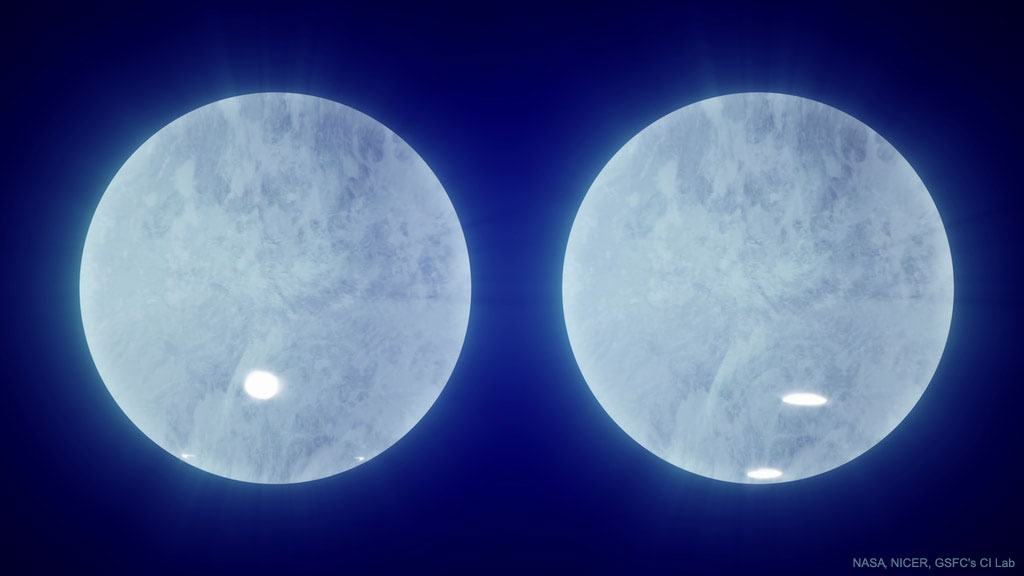
What do neutron stars look like? Previously these city-sized stars were too small and too far away to resolve. Recently, however, the first maps of the locations and sizes of hotspots on a neutron star's surface have been made by carefully modeling how the rapid spin makes the star's X-ray brightness rise and fall. Based on a leading model, an illustrative map of pulsar J0030+0451's hotspots is pictured, with the rest of the star's surface filled in with a false patchy blue. J0030 spins once every 0.0049 seconds and is located about 1000 light years away. The map was computed from data taken by NASA's Neutron star Interior Composition ExploreR (NICER) X-ray telescope attached to the International Space Station. The computed locations of these hotspots is surprising and not well understood. Because the gravitational lensing effect of neutron stars is so strong, J0300 displays more than half of its surface toward the Earth. Studying the appearance of pulsars like J0030 allows accurate estimates of the neutron star's mass, radius, and the internal physics that keeps the star from imploding into a black hole.

from NASA https://ift.tt/2rZ9G5N
via IFTTT
Hello, Information from NASA NASA’s Teams Engaging Affiliated Museums and Informal Institutions (TEAM II) program has selected four informal education organizations to promote STEM learning and help inspire the next generation of explorers.

December 17, 2019
from NASA https://ift.tt/2sAQsUg
Hello, Information from NASA For the eighth consecutive year, NASA has been selected by the Partnership for Public Service as the Best Place to Work in Government. The rankings, announced Tuesday, reflect NASA’s unified focus and dedication to sending humans farther into space than ever before, and the agency’s highest employee satisfaction results since this index was develop

December 17, 2019
from NASA https://ift.tt/2PvQPZf
Astronomy news update from NASA :
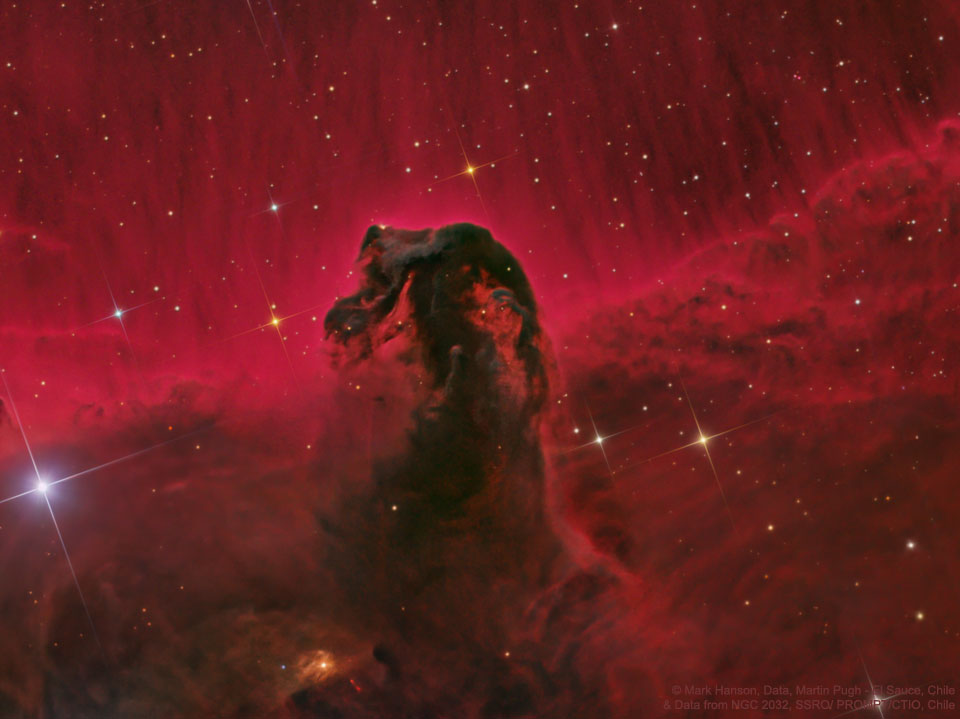
Sculpted by stellar winds and radiation, a magnificent interstellar dust cloud by chance has assumed this recognizable shape. Fittingly named the Horsehead Nebula, it is some 1,500 light-years distant, embedded in the vast Orion cloud complex. About five light-years "tall", the dark cloud is cataloged as Barnard 33 and is visible only because its obscuring dust is silhouetted against the glowing red emission nebula IC 434. Stars are forming within the dark cloud. Contrasting blue reflection nebula NGC 2023, surrounding a hot, young star, is at the lower left of the full image. The featured gorgeous color image combines both narrowband and broadband images recorded using several different telescopes.

from NASA https://ift.tt/2Psqk6Z
via IFTTT
Hello, Information from NASA NASA’s first large scale, piloted X-plane in more than three decades is cleared for final assembly and integration of its systems following a major project review by senior managers held Thursday at NASA Headquarters in Washington.

December 16, 2019
from NASA https://ift.tt/2r1u5a4