Hello, Information from NASA NASA will announce the first results from the Parker Solar Probe mission, the agency's revolutionary mission to "touch" the Sun, during a media teleconference at 1:30 p.m. EST Wednesday, Dec. 4.

December 02, 2019
from NASA https://ift.tt/2sDIeL3

By BY ADAM SATARIANO from NYT Technology https://ift.tt/2rQ7ME4
via IFTTT
Astronomy news update from NASA :
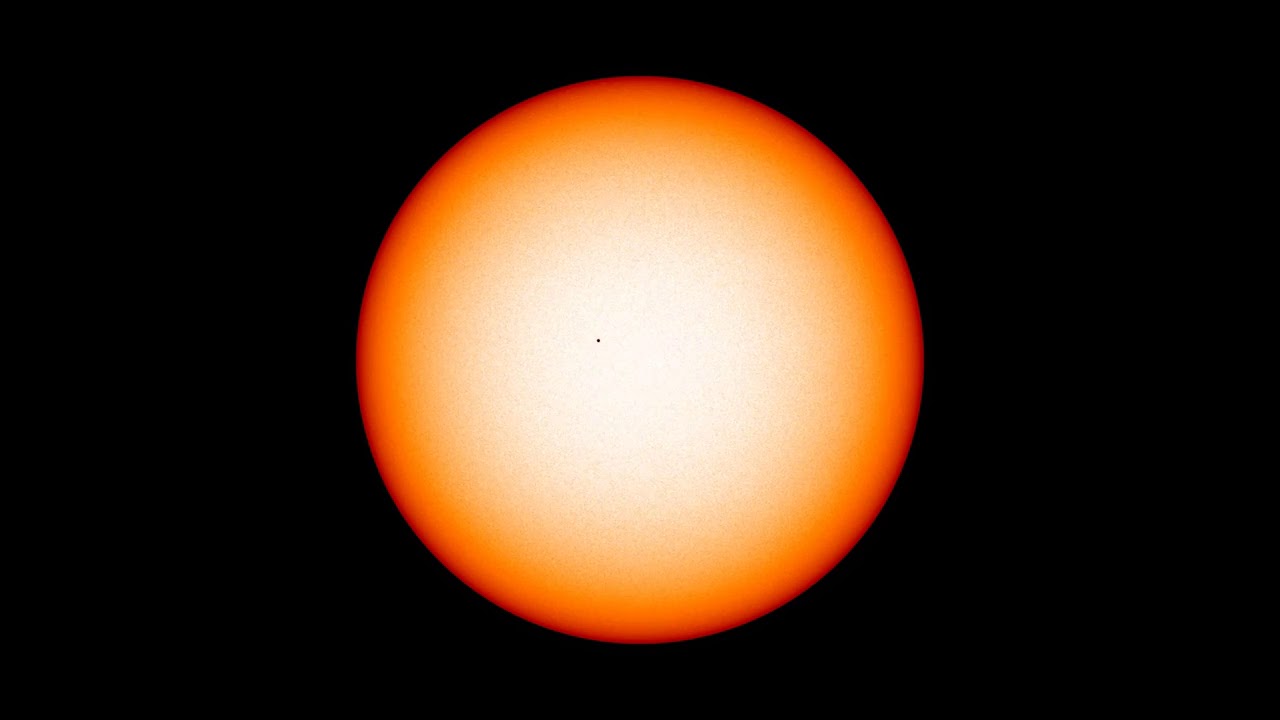
What's that black dot crossing the Sun? The planet Mercury. Mercury usually passes over or under the Sun, as seen from Earth, but last month the Solar System's innermost planet appeared to go just about straight across the middle. Although witnessed by planet admirers across the globe, a particularly clear view was captured by the Solar Dynamics Observatory (SDO) in Earth orbit. The featured video was captured by the SDO's HMI instrument in a broad range of visible light, and compresses the 5 1/2 hour transit into about 13 seconds. The background Sun was unusually quiet -- even for being near Solar Minimum -- and showed no sunspots. The next solar transit by Mercury will occur in 2032.

from NASA https://ift.tt/33G3wV7
via IFTTT
Our new 'Word Of The Day' article update : PEBCAK , n :
(computing, humorous, also attributively) Chiefly used by technical support helpdesk staff: a problem experienced with a user's computer that is due to user error. Today is World Computer Literacy Day, which was launched by Indian company NIIT to encourage the development of computing skills, especially among women and children in India.
Astronomy news update from NASA :
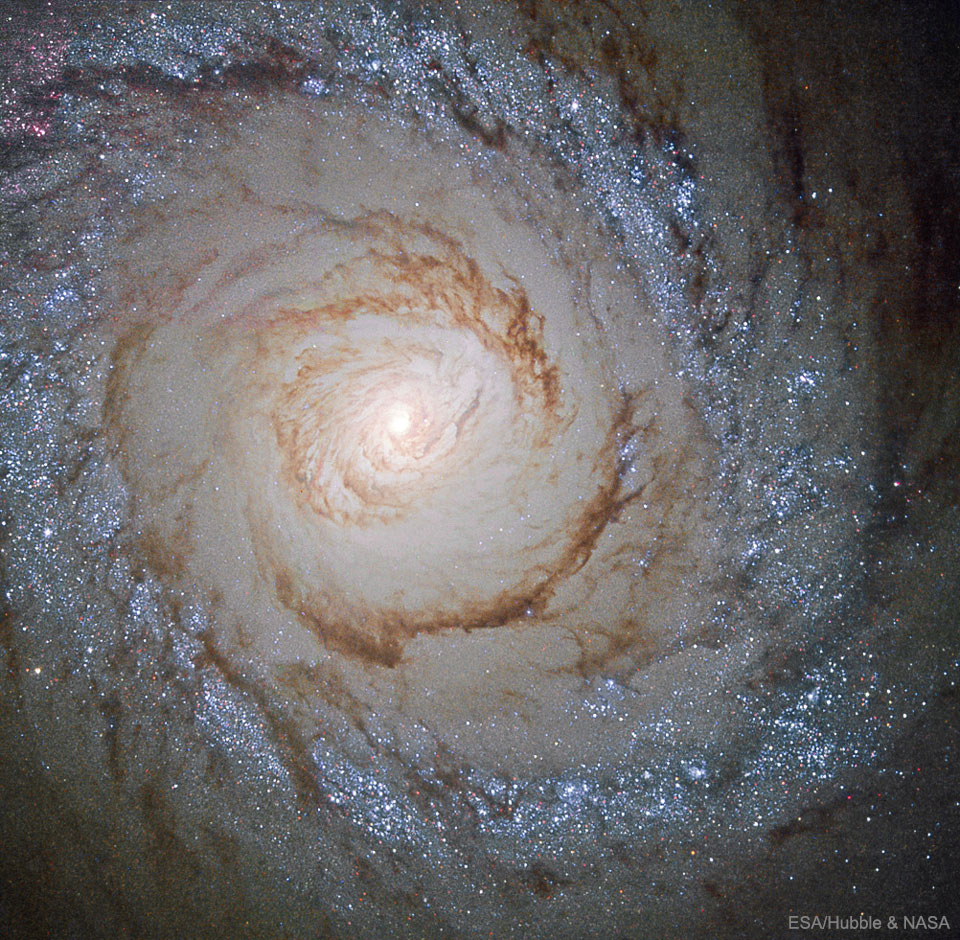
Why does this galaxy have a ring of bright blue stars? Beautiful island universe Messier 94 lies a mere 15 million light-years distant in the northern constellation of the Hunting Dogs (Canes Venatici). A popular target for Earth-based astronomers, the face-on spiral galaxy is about 30,000 light-years across, with spiral arms sweeping through the outskirts of its broad disk. But this Hubble Space Telescope field of view spans about 7,000 light-years across M94's central region. The featured close-up highlights the galaxy's compact, bright nucleus, prominent inner dust lanes, and the remarkable bluish ring of young massive stars. The ring stars are all likely less than 10 million years old, indicating that M94 is a starburst galaxy that is experiencing an epoch of rapid star formation. The circular ripple of blue stars is likely a wave propagating outward, having been triggered by the gravity and rotation of a oval matter distributions. Because M94 is relatively nearby, astronomers can better explore details of its starburst ring.

from NASA https://ift.tt/2r1lDrk
via IFTTT
Our new 'Word Of The Day' article update : tip of the iceberg , n :
(idiomatic) A small indication of a larger possibility; a problem that is much bigger than it seems. On this day 60 years ago in 1959, the Antarctic Treaty was signed. The day was declared by Our Spaces as Antarctica Day to build awareness about Antarctica and to emphasize the importance of nations co-operating peacefully through science to make decisions about places beyond the boundaries of sovereign states.
Astronomy news update from NASA :
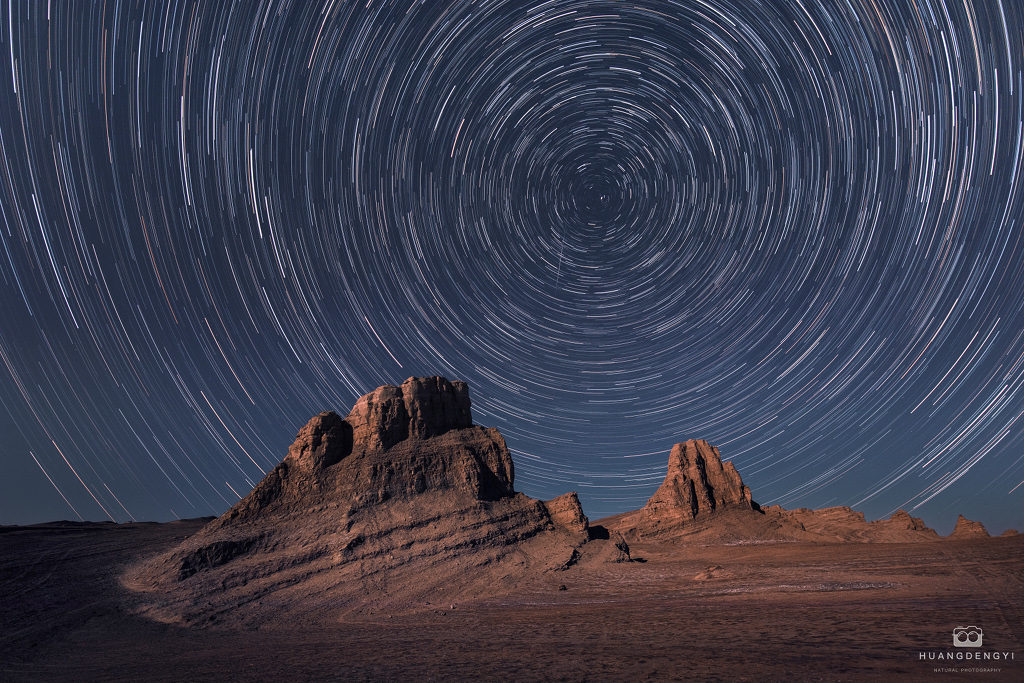
Does Mars have a north star? In long exposures of Earth's night sky, star trails make concentric arcs around the north celestial pole, the direction of our fair planet's axis of rotation. Bright star Polaris is presently the Earth's North Star, close on the sky to Earth's north celestial pole. But long exposures on Mars show star trails too, concentric arcs about a celestial pole determined by Mars' axis of rotation. Tilted like planet Earth's, the martian axis of rotation points in a different direction in space though. It points to a place on the sky between stars in Cygnus and Cepheus with no bright star comparable to Earth's north star Polaris nearby. So even though this ruddy, weathered landscape is remarkably reminiscent of terrain in images from the martian surface, the view must be from planet Earth, with north star Polaris near the center of concentric star trails. The landforms in the foreground are found in Qinghai Province in northwestern China.

from NASA https://ift.tt/2rADqpl
via IFTTT