
Astronomy news update from NASA : 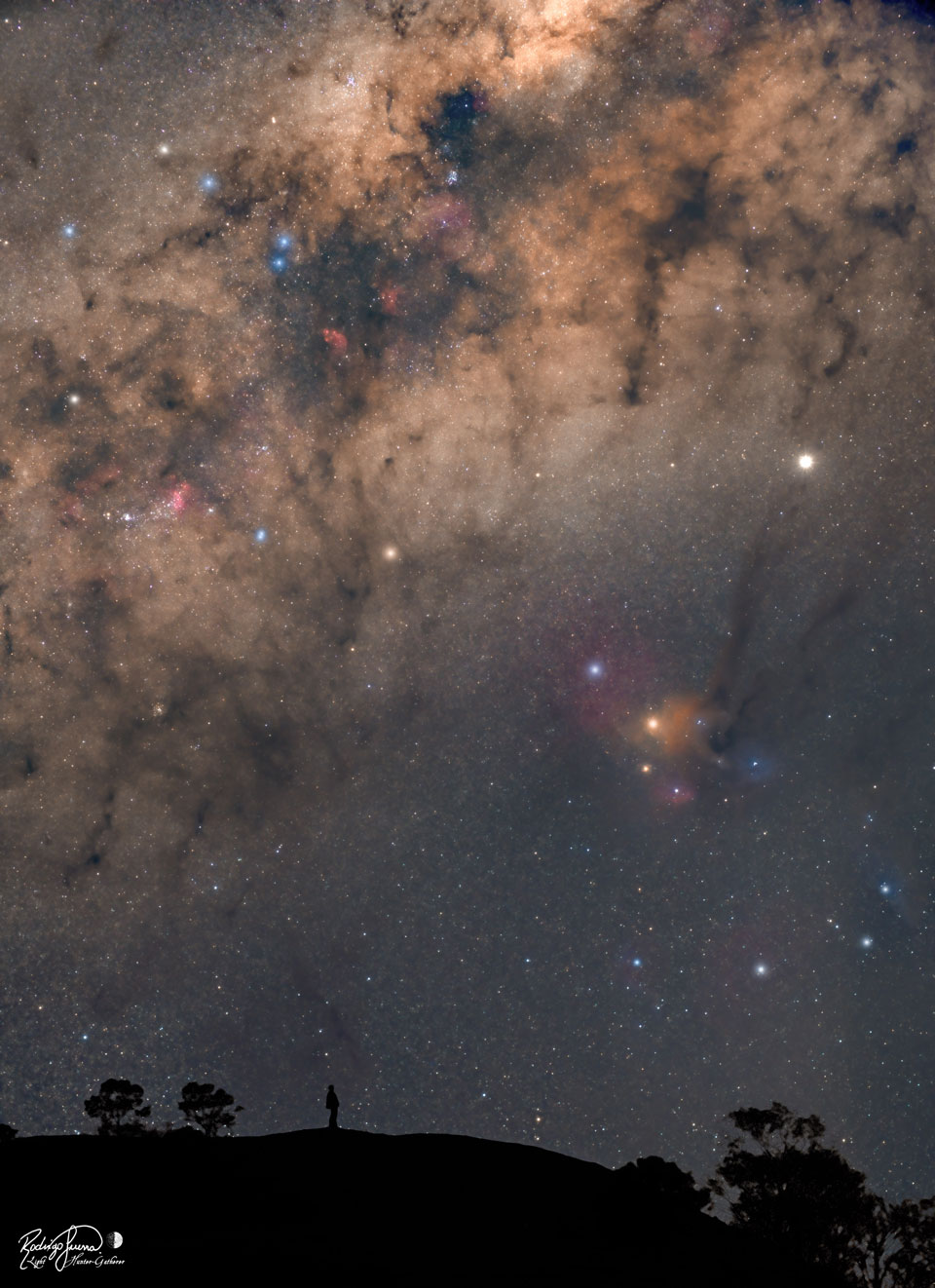
Have you contemplated your home galaxy lately? If your sky looked like this, perhaps you'd contemplate it more often! The featured picture is actually a composite of two images taken last month from the same location in south Brazil and with the same camera -- but a few hours apart. The person in the image -- also the astrophotographer -- has much to see in the Milky Way Galaxy above. The central band of our home Galaxy stretches diagonally up from the lower left. This band is dotted with spectacular sights including dark nebular filaments, bright blue stars, and red nebulas. Millions of fainter and redder stars fill in the deep Galactic background. To the lower right of the Milky Way are the colorful gas and dust clouds of Rho Ophiuchus, featuring the bright orange star Antares. On this night, just above and to the right of Antares was a bright planet Jupiter. The sky is so old and so familiar that humanity has formulated many stories about it, some of which inspired this very picture.
from NASA https://ift.tt/2oHA82j
via IFTTT
Have you contemplated your home galaxy lately? If your sky looked like this, perhaps you'd contemplate it more often! The featured picture is actually a composite of two images taken last month from the same location in south Brazil and with the same camera -- but a few hours apart. The person in the image -- also the astrophotographer -- has much to see in the Milky Way Galaxy above. The central band of our home Galaxy stretches diagonally up from the lower left. This band is dotted with spectacular sights including dark nebular filaments, bright blue stars, and red nebulas. Millions of fainter and redder stars fill in the deep Galactic background. To the lower right of the Milky Way are the colorful gas and dust clouds of Rho Ophiuchus, featuring the bright orange star Antares. On this night, just above and to the right of Antares was a bright planet Jupiter. The sky is so old and so familiar that humanity has formulated many stories about it, some of which inspired this very picture.
from NASA https://ift.tt/2oHA82j
via IFTTT
Our new 'Word Of The Day' article update : beg to differ , v :
(idiomatic) To offer an opposing opinion humbly. (idiomatic) To differ (strongly) in interpretation or opinion.
(idiomatic) To offer an opposing opinion humbly. (idiomatic) To differ (strongly) in interpretation or opinion.

Astronomy news update from NASA : 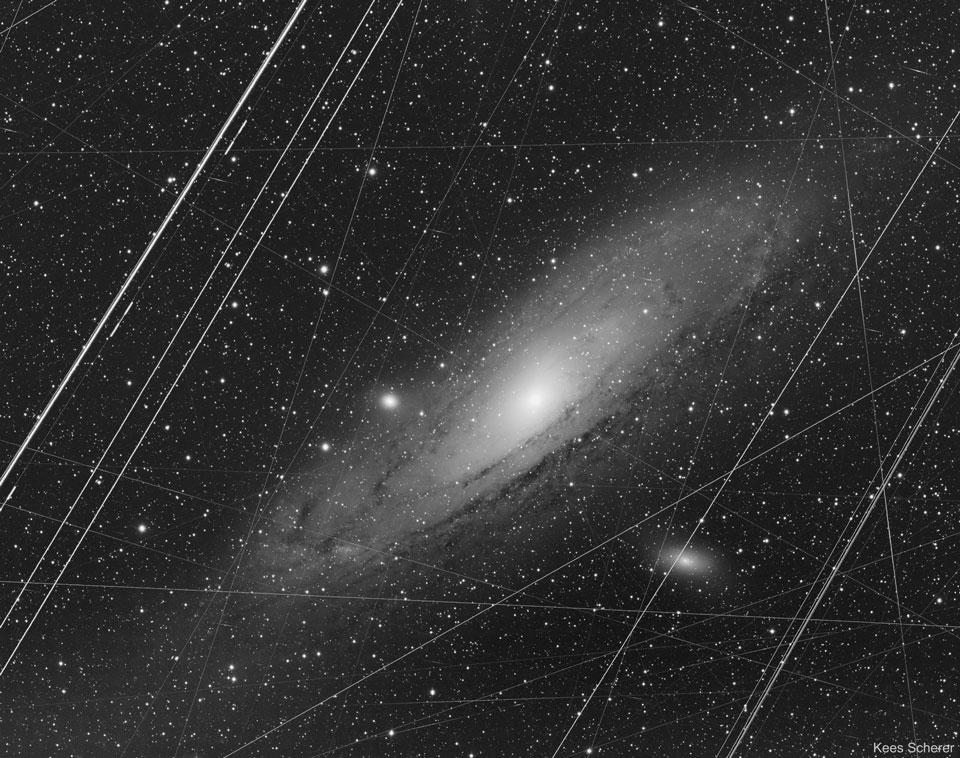
What does the Andromeda galaxy really look like? The featured image shows how our Milky Way Galaxy's closest major galactic neighbor really appears in a long exposure through Earth's busy skies and with a digital camera that introduces normal imperfections. The picture is a stack of 223 images, each a 300 second exposure, taken from a garden observatory in Portugal over the past year. Obvious image deficiencies include bright parallel airplane trails, long and continuous satellite trails, short cosmic ray streaks, and bad pixels. These imperfections were actually not removed with Photoshop specifically, but rather greatly reduced with a series of computer software packages that included Astro Pixel Processor, DeepSkyStacker, and PixInsight. All of this work was done not to deceive you with a digital fantasy that has little to do with the real likeness of the Andromeda galaxy (M31), but to minimize Earthly artifacts that have nothing to do with the distant galaxy and so better recreate what M31 really does look like.
from NASA https://ift.tt/33xOKAd
via IFTTT
What does the Andromeda galaxy really look like? The featured image shows how our Milky Way Galaxy's closest major galactic neighbor really appears in a long exposure through Earth's busy skies and with a digital camera that introduces normal imperfections. The picture is a stack of 223 images, each a 300 second exposure, taken from a garden observatory in Portugal over the past year. Obvious image deficiencies include bright parallel airplane trails, long and continuous satellite trails, short cosmic ray streaks, and bad pixels. These imperfections were actually not removed with Photoshop specifically, but rather greatly reduced with a series of computer software packages that included Astro Pixel Processor, DeepSkyStacker, and PixInsight. All of this work was done not to deceive you with a digital fantasy that has little to do with the real likeness of the Andromeda galaxy (M31), but to minimize Earthly artifacts that have nothing to do with the distant galaxy and so better recreate what M31 really does look like.
from NASA https://ift.tt/33xOKAd
via IFTTT
Our new 'Word Of The Day' article update : Woozle effect , proper n :
The phenomenon whereby frequent citation of earlier publications leads to a mistaken public belief in something for which there is no evidence, giving rise to an urban myth. British author A. A. Milne’s book Winnie-the-Pooh was first published on this day in 1926. It features a story in which Winnie-the-Pooh and Piglet follow their own tracks in the snow, believing them to be the tracks of the imaginary “Woozle”.
The phenomenon whereby frequent citation of earlier publications leads to a mistaken public belief in something for which there is no evidence, giving rise to an urban myth. British author A. A. Milne’s book Winnie-the-Pooh was first published on this day in 1926. It features a story in which Winnie-the-Pooh and Piglet follow their own tracks in the snow, believing them to be the tracks of the imaginary “Woozle”.
Astronomy news update from NASA : 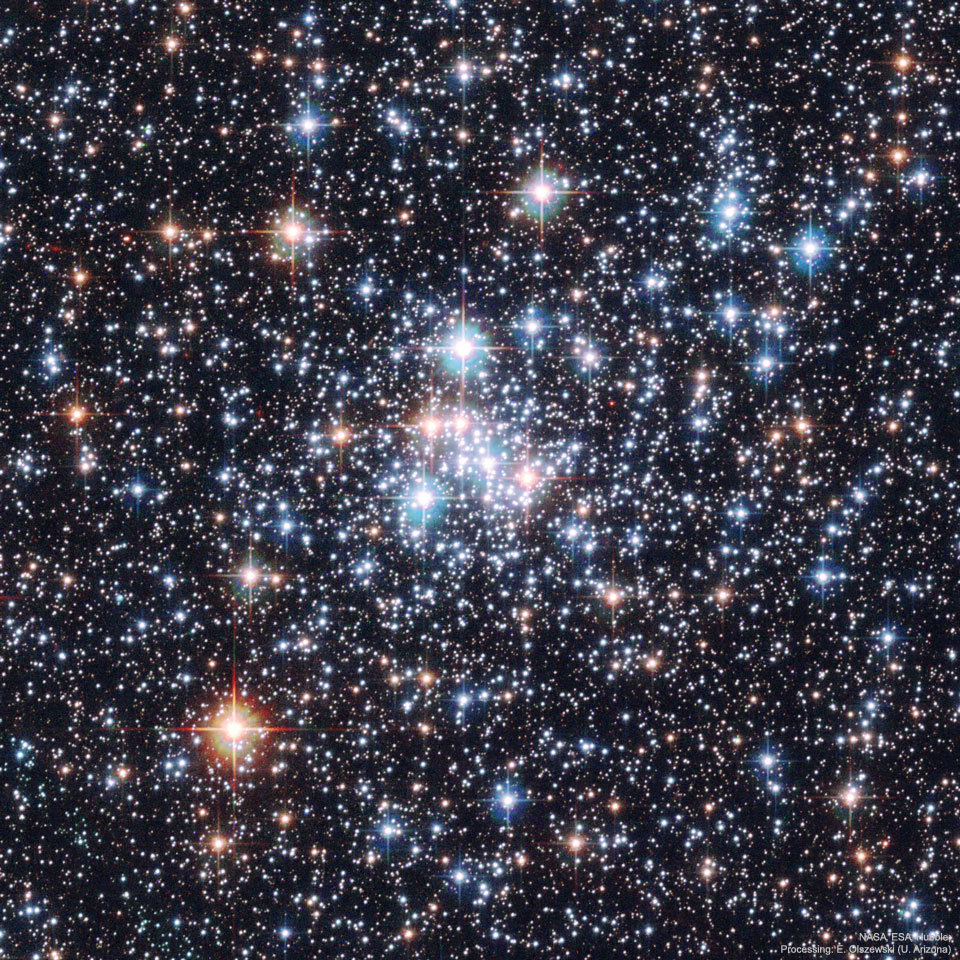
Jewels don't shine this bright -- only stars do. Like gems in a jewel box, though, the stars of open cluster NGC 290 glitter in a beautiful display of brightness and color. The photogenic cluster, pictured here, was captured in 2006 by the orbiting Hubble Space Telescope. Open clusters of stars are younger, contain few stars, and contain a much higher fraction of blue stars than do globular clusters of stars. NGC 290 lies about 200,000 light-years distant in a neighboring galaxy called the Small Cloud of Magellan (SMC). The open cluster contains hundreds of stars and spans about 65 light years across. NGC 290 and other open clusters are good laboratories for studying how stars of different masses evolve, since all the open cluster's stars were born at about the same time.
from NASA https://ift.tt/2Mej0dD
via IFTTT
Jewels don't shine this bright -- only stars do. Like gems in a jewel box, though, the stars of open cluster NGC 290 glitter in a beautiful display of brightness and color. The photogenic cluster, pictured here, was captured in 2006 by the orbiting Hubble Space Telescope. Open clusters of stars are younger, contain few stars, and contain a much higher fraction of blue stars than do globular clusters of stars. NGC 290 lies about 200,000 light-years distant in a neighboring galaxy called the Small Cloud of Magellan (SMC). The open cluster contains hundreds of stars and spans about 65 light years across. NGC 290 and other open clusters are good laboratories for studying how stars of different masses evolve, since all the open cluster's stars were born at about the same time.
from NASA https://ift.tt/2Mej0dD
via IFTTT


