Hello, Information from NASA A series of NASA flight tests has successfully demonstrated technologies that achieve a significant reduction in the noise generated by aircraft and heard by communities near airports.

June 25, 2018
from NASA https://ift.tt/2tD7hum

By J. D. BIERSDORFER from NYT Technology https://ift.tt/2IqWclE
via IFTTT
Astronomy news update from NASA :
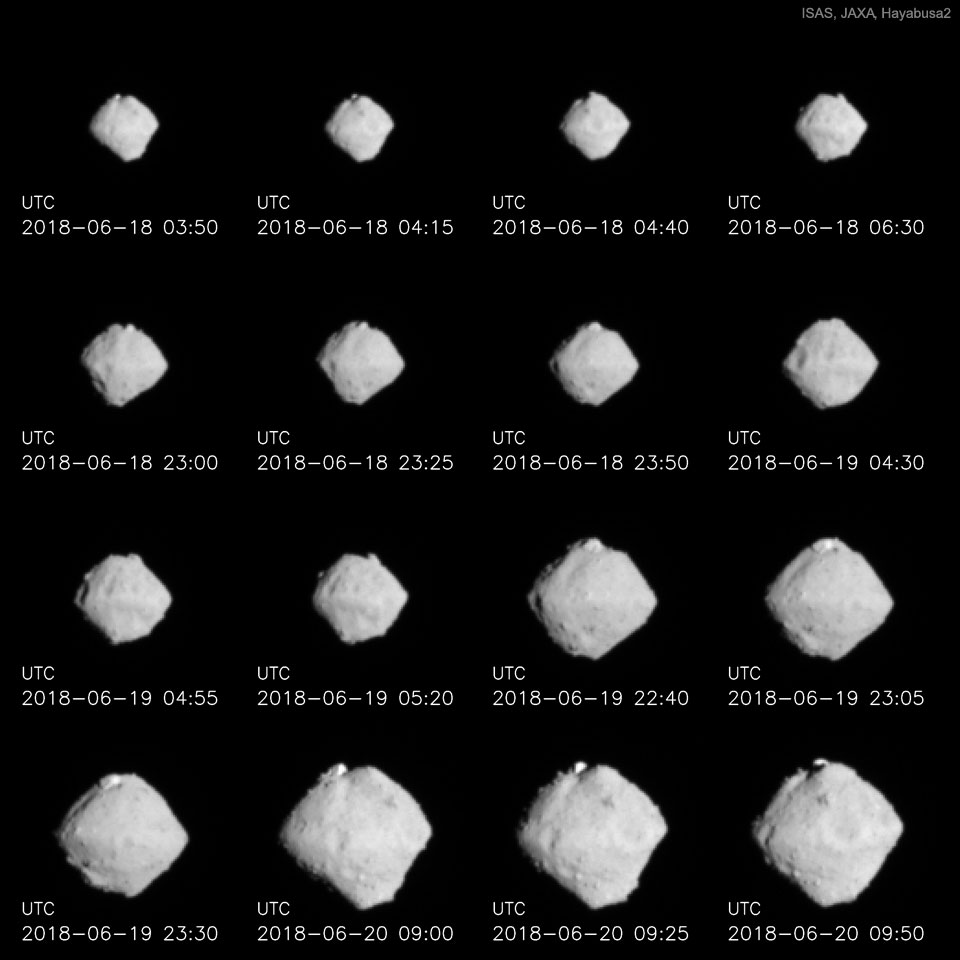
It looks like a big space diamond -- but with craters. It's 162173 Ryugu (Dragon's Castle), and Japan's robotic Hayabusa2 mission is now arriving at this near-Earth asteroid. Ambitious Hayabusa2 is carrying an armada of separable probes, including two impactors, four small close-proximity hoverers, three small surface hoppers, and the Mobile Asteroid Surface Scout (MASCOT) which will land, study, and move around on Ryugu's surface. Most of these are equipped with cameras. Moreover, Hayabusa2 itself is scheduled to collect surface samples and return these samples to Earth for a detailed analysis near the end of 2020. Previously, what was known about asteroid Ryugu was its orbit, that it spans about one kilometer, and that it has a dark surface that reflects unusual colors. Studying Ryugu could tell humanity not only about Ryugu's surface and interior, but about what materials were available in the early Solar System for the development of life. Pictured, a series of approach images shows features suggestive of large boulders and craters.

from NASA https://ift.tt/2tAl314
via IFTTT

By STEVE LOHR from NYT Technology https://ift.tt/2IqEJtt
via IFTTT

By ADAM SATARIANO from NYT Technology https://ift.tt/2Mmapm2
via IFTTT
Astronomy news update from NASA :
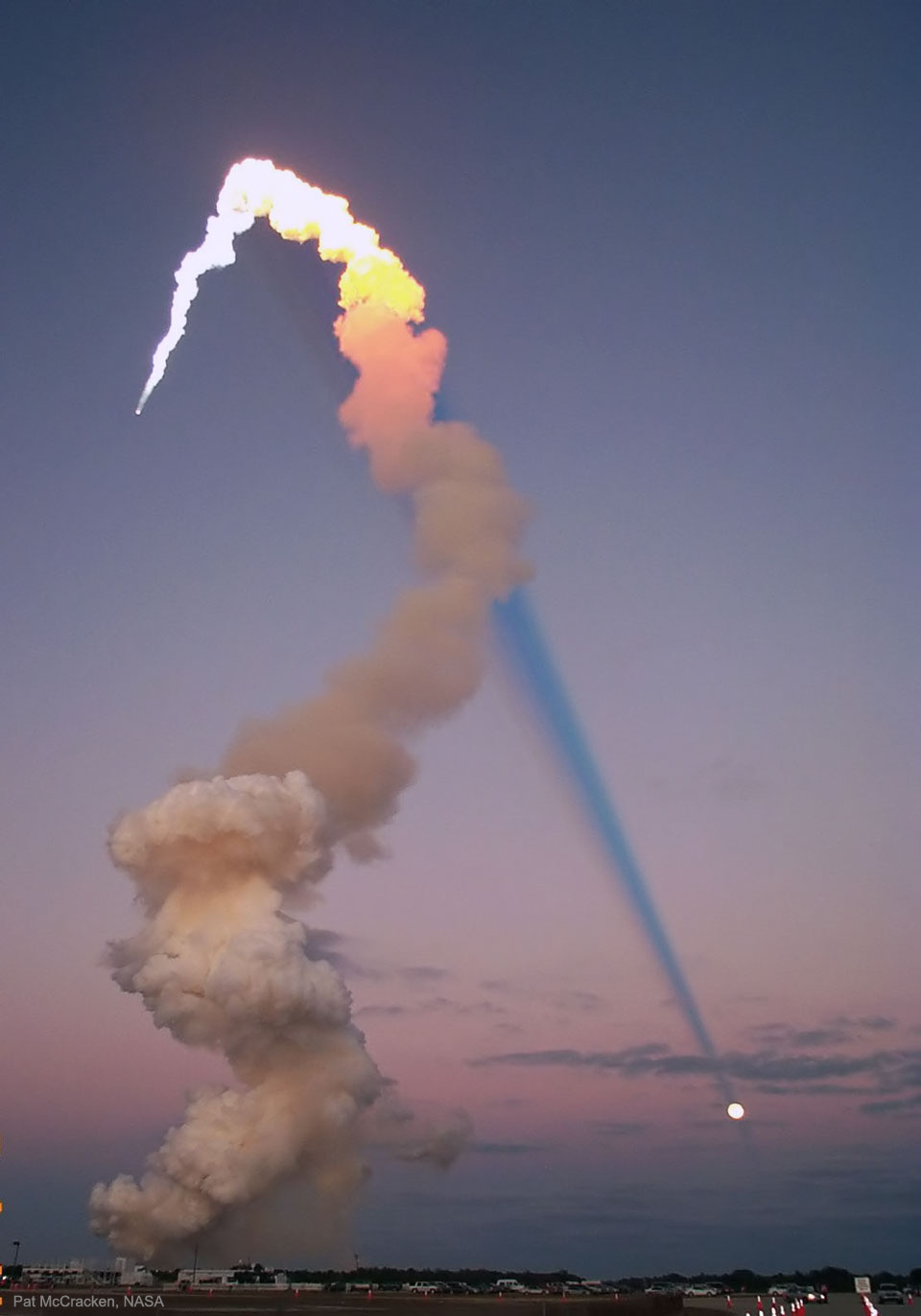
Why would the shadow of a space shuttle launch plume point toward the Moon? In early 2001 during a launch of Atlantis, the Sun, Earth, Moon, and rocket were all properly aligned for this photogenic coincidence. First, for the space shuttle's plume to cast a long shadow, the time of day must be either near sunrise or sunset. Only then will the shadow be its longest and extend all the way to the horizon. Finally, during a Full Moon, the Sun and Moon are on opposite sides of the sky. Just after sunset, for example, the Sun is slightly below the horizon, and, in the other direction, the Moon is slightly above the horizon. Therefore, as Atlantis blasted off, just after sunset, its shadow projected away from the Sun toward the opposite horizon, where the Full Moon happened to be.

from NASA https://ift.tt/2KhLq2K
via IFTTT

By NELLIE BOWLES from NYT Technology https://ift.tt/2yBEkoF
via IFTTT